

5 min read
Key Takeaways
- Hay is dry, stackable, and easier to store, but is height-limited and flammable.
- Silage requires sealed containment, faster transport, and greater hygiene controls.
- McNaughts offers tailored solutions for both feed types, with equipment matched to your load.
- Choosing the right method ensures feed arrives fresh, safe, and ready to use.
When it comes to feeding livestock, both hay and silage are essential, but they’re not the same when it comes to storage, handling, or transport. For farmers and freight providers, understanding the differences between hay transport and silage transport is key to maintaining feed quality and ensuring safe delivery. At McNaughts, we specialise in moving all types of bulk agricultural commodities, including hay and silage, across regional Australia. Here’s what you need to know about how these two feed types differ, and what that means for your freight strategy.
What Are the Main Differences Between Hay and Silage?
While both are used as livestock feed, hay and silage differ in how they are processed, stored, and preserved:
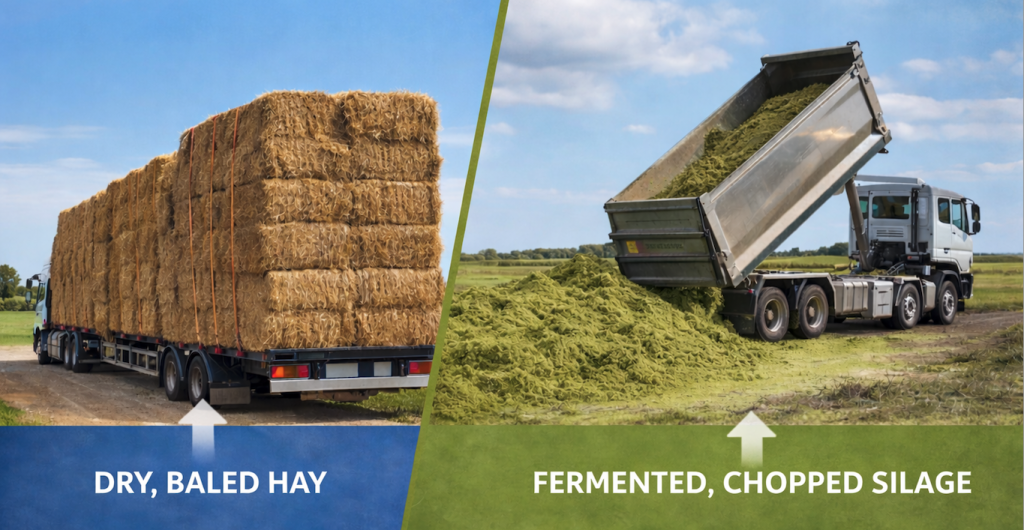
- Hay is dried forage (usually grass or legumes) that’s baled once moisture levels are low enough to prevent spoilage. It’s typically stored in round or square bales and remains stable in dry conditions.
- Silage is moist forage that’s been compacted and fermented to preserve its nutrients. It must be stored airtight, either in pits, wraps, or silage bags, and is more sensitive to air, moisture, and microbial contamination during handling.
These differences significantly influence how each product is loaded, transported, and stored.
How Is Hay Transported and What Are the Challenges?
Hay transport typically involves stacked bales loaded onto flatbed trailers. Because hay is dry and less perishable, it allows for more flexible transport windows and simpler loading procedures.
However, there are challenges:
- Fire risk: Dry hay is flammable, especially during hot, dry periods. It requires careful stacking and secure strapping.
- Load height: Hay bales can create high-profile loads, which must comply with road clearance limits.
- Weather exposure: While hay is more resilient than silage, it should still be protected from rain during transport to avoid mould growth or spoilage.
At McNaughts, we ensure that hay is loaded securely, monitored during transit, and delivered promptly to prevent loss of quality.
What Makes Silage Transport More Complex?
Silage transport requires greater care due to the material’s high moisture content and susceptibility to spoilage when exposed to oxygen.
Key considerations include:
- Containment: Silage is often loose or bagged and needs to be fully enclosed. Walking floor trailers or sealed tipper bins are commonly used.
- Timing: Because silage spoils quickly once exposed, it must be transported swiftly and efficiently, especially in warmer months.
- Hygiene: Equipment must be cleaned regularly to avoid contamination and odour buildup.
Our silage transport services use specialised equipment to contain and protect loads, ensuring that silage remains fresh and effective as livestock feed.
How Do Loading and Unloading Methods Differ?
Hay is usually loaded by forklifts or bale grabs and stacked manually on flatbeds or within side-loader trailers. It’s unloaded in a similar fashion, often requiring coordination at both ends to avoid damage to bales.
Silage, being a loose material, is often loaded via loaders, silage chutes, or directly from pits into walking floor trailers. It’s typically unloaded through floor movement systems or hydraulic tipping, which allows for faster discharge with minimal waste.
McNaughts’ diverse fleet includes flatbeds, side tippers, and walking floor trailers, ensuring we match the right trailer to the right feed type.
Which Transport Option Is More Weather Sensitive?
Silage is far more weather-sensitive than hay. While hay can tolerate short periods of exposure (depending on bale wrapping and density), silage deteriorates rapidly when exposed to air or water. Transporting silage in humid or wet conditions without adequate sealing can result in fermentation disruption, spoilage, and loss of nutritional value. That’s why timing and equipment choice are critical for silage movements.
Choose McNaughts for Hay and Silage Transport
With more than 70 years of rural freight experience, McNaughts understands the unique challenges of transporting livestock feed across Australia. Our services include:
- Specialised equipment for both dry hay and moist silage
- Trained operators who understand feed safety and seasonal timing
- Flexible, regional delivery across VIC, NSW, and SA
- Compliance with NHVR standards and rural road safety protocols
- Integrated bulk freight transport and storage support
Whether you’re planning your next feed run or need help during a seasonal peak, our team can help you move hay and silage efficiently and safely. Contact us to book your next hay or silage delivery.
