

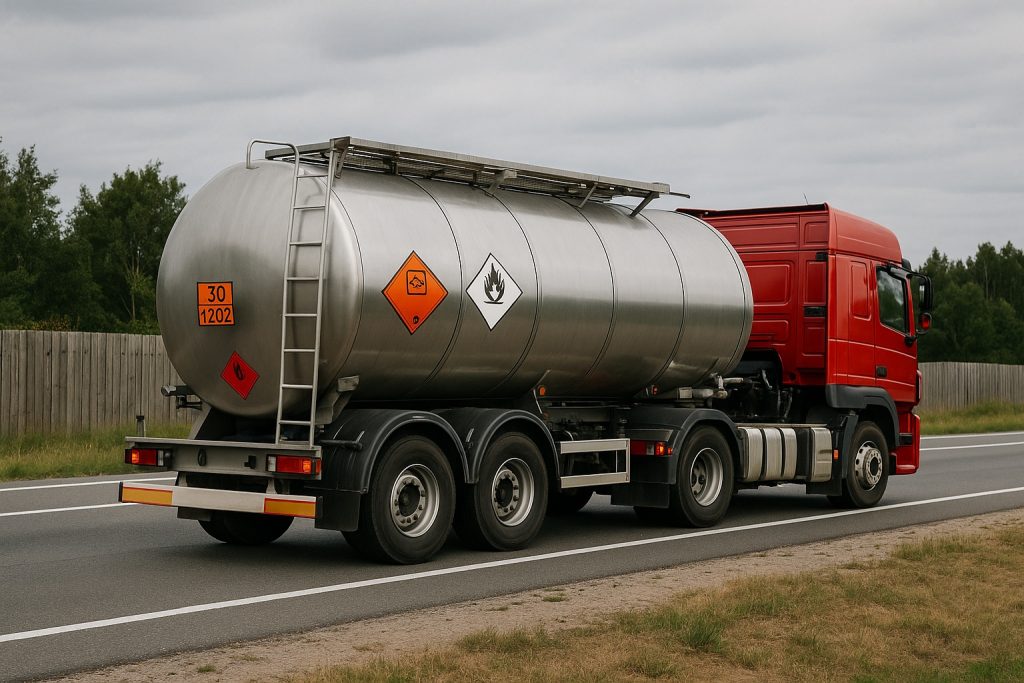
Transporting dangerous goods in Australia means following the Australian Dangerous Goods (ADG) Code and your state or territory’s laws. In practice, that covers correct classification, packaging and labelling, placarded vehicles, accurate transport documents, licensed drivers, segregation of incompatible loads and emergency equipment on board. Using a specialist dangerous goods transport carrier is the simplest way to tick every box.
Key Takeaways
- Dangerous goods are substances that can harm people, property or the environment, sorted into nine classes under the ADG Code.
- The ADG Code sets the technical rules, while each state and territory enforces them through its own laws and regulators.
- Above set quantity limits, vehicles need placards, and drivers and vehicles may need dangerous goods licences.
- Every load must travel with correct transport documents, emergency information and suitable safety equipment.
- Under Chain of Responsibility, consignors, packers, loaders and carriers all share legal duties for dangerous goods transportation.
What Counts as Dangerous Goods?
Dangerous goods are substances or articles that can harm people, property or the environment if they leak, ignite, react or are handled the wrong way. They’re identified by a UN number and assigned to one of nine classes based on their main hazard:
- Class 1, Explosives: fireworks, flares and ammunition.
- Class 2, Gases: LPG, aerosols, oxygen and refrigerant gases.
- Class 3, Flammable liquids: petrol, diesel blends, some paints and solvents.
- Class 4, Flammable solids: matches, some metal powders and materials that ignite when wet.
- Class 5, Oxidising substances and organic peroxides: including ammonium nitrate and some pool chemicals.
- Class 6, Toxic and infectious substances: many pesticides, fumigants and clinical waste.
- Class 7, Radioactive material: some medical and industrial sources.
- Class 8, Corrosives: acids, alkalis and car batteries.
- Class 9, Miscellaneous: lithium batteries, dry ice and environmentally hazardous substances.
A product’s Safety Data Sheet (SDS) will tell you its class, UN number and packing group. That’s always the first thing to check before booking freight.
Who Regulates Dangerous Goods Transportation in Australia?
The rulebook for moving dangerous goods by road and rail is the Australian Dangerous Goods Code, known as the ADG Code. It’s developed nationally and based on the United Nations recommendations used around the world, so the classes, labels and placards look much the same wherever you go.
The ADG Code doesn’t enforce itself, though. Each state and territory adopts it through its own dangerous goods laws and appoints a regulator to issue licences, run inspections and hand out penalties. If your freight crosses a border, say from NSW into Victoria or Queensland, the requirements stay largely consistent, but licensing and enforcement sit with the local authority.
On top of the ADG Code, heavy vehicles must also meet the Heavy Vehicle National Law for mass, fatigue and vehicle standards in participating states. Workplaces that store or handle dangerous goods have separate work health and safety duties too.
Key Requirements for Transporting Dangerous Goods
Once you know what you’re moving, the ADG Code sets out what’s needed to move it legally and safely. Here are the main requirements every load has to meet.
Classification, packaging and labelling
The consignor must correctly classify the goods and pack them in approved packaging rated for that product. Each package needs the right class label, UN number and proper shipping name. Damaged, leaking or mislabelled packages shouldn’t be loaded at all.
Placards and emergency information
When a load goes over the quantity limits set in the ADG Code, the vehicle must display placards. Bulk loads and larger quantities also need an Emergency Information Panel showing the UN number, hazard details and an emergency contact. These tell fire crews and police exactly what they’re dealing with if something goes wrong.
Transport documents
Every placarded load travels with a dangerous goods transport document listing the UN number, shipping name, class, packing group and quantity. The driver also carries emergency procedure guides, and the paperwork must be kept somewhere easy to find in the cab.
Driver and vehicle licences
Drivers carrying placard loads generally need a dangerous goods driver licence, which involves training and medical checks. Vehicles carrying dangerous goods in bulk, such as tankers, typically need a vehicle licence from the state regulator as well.
Segregation and load restraint
Some classes react badly together. The ADG Code sets out which goods can’t share a vehicle, such as oxidisers with flammable liquids, and how far apart others must be. Loads must also be properly restrained so they can’t shift or fall during the trip.
Safety equipment
Placarded vehicles must carry suitable fire extinguishers, personal protective equipment and spill response gear for the goods on board. Drivers need to know how to use it.
Chain of Responsibility: Your Duties as a Consignor
Compliance isn’t just the driver’s job. Under Chain of Responsibility, everyone who has a hand in the load shares the legal duty to keep it safe. If you’re sending dangerous goods, make sure you:
- Provide accurate information: give your carrier the SDS, UN number, class, packing group and quantity before pickup.
- Package and label correctly: use approved packaging and make sure every label is clear and undamaged.
- Check your carrier is qualified: confirm they hold the right licences, placards and experience for your goods.
- Load safely or supervise loading: follow segregation rules and make sure the load is properly restrained.
- Keep records: hold onto transport documents and SDS copies in case of an audit or incident.
- Never pressure drivers: unrealistic deadlines that push drivers to cut corners can put you in breach too.
Getting these basics right protects your business, your people and everyone else on the road.
Dangerous Goods Common in Agriculture
You don’t have to run a chemical plant to deal with dangerous goods. Plenty turn up on farms and in rural supply chains every season.
Some fertilisers are a good example. Ammonium nitrate-based products are Class 5.1 oxidisers, and certain blends carry extra security and handling rules. Most standard granular fertiliser moves as ordinary freight, but it’s worth checking the SDS for every product before it’s booked.
Grain growers also handle hazardous products. Phosphine fumigants used in silos and grain storage are toxic, and many herbicides and pesticides fall under Class 6.1 or Class 9. Diesel, LPG and lithium batteries round out the list.
Often, dangerous goods travel alongside everyday cargo. A load of general freight transport might include a pallet of chemicals, and that single pallet changes the rules for the whole truck. Likewise, operators running bulk freight transport need clean trailers and clear separation so hazardous residue never contaminates grain or feed.
Getting Dangerous Goods Transportation Right
The requirements for transporting dangerous goods in Australia can look complex, but they come down to a few clear steps. Know what you’re sending, package and label it properly, carry the right paperwork and use licensed drivers in properly equipped, placarded vehicles. Everyone in the chain plays a part.
McNaughts is a family owned and operated freight company based in Finley, NSW, with Singles, B-Doubles and Road Train combinations servicing customers right across Australia. Our team understands the rules for dangerous goods transportation and works with you to keep every load safe, compliant and on time.
Book Dangerous Goods Transport With McNaughts
Need to move hazardous freight? Contact us today to talk through your load, check what’s required and get a quote.
