

Key Takeaways
- Moisture control is essential to preserving grain quality—excess moisture leads to spoilage, mould growth, and nutrient loss during both storage and transport.
- High moisture levels in stored grain can create heat pockets, support fungal growth, attract insects, and result in the development of harmful mycotoxins.
- Moisture levels can change during transport, especially in unsealed or poorly ventilated trailers, increasing the risk of condensation and spoilage in transit.
- Grain exposed to moisture variability is often downgraded at receival points, leading to financial losses or complete rejection of the load.
- Best practices in moisture management include using moisture meters, aeration systems, regular inspections, and even grain distribution within silos.
- Logistics partners like McNaughts play a key role by providing sealed, weather-resistant transport and coordinating efficient, timely pickups post-harvest.
- Protecting grain quality from paddock to delivery requires collaboration between growers and certified transport providers to maintain optimal storage and transit conditions.
Moisture control is one of the most critical factors in preserving grain quality during storage and transport. Whether you’re dealing with wheat, barley, or canola, excessive moisture can lead to spoilage, reduced nutritional value, and financial losses. For grain growers and handlers across Australia, understanding how moisture impacts stored grain and how to manage it, is essential for long-term profitability.
At McNaughts, we specialise in the storage and transportation of bulk grain, and we know first-hand how environmental conditions can impact grain quality. Here’s what every grower, storage operator, and transporter should know.
Why Is Moisture Control Critical in Grain Storage?
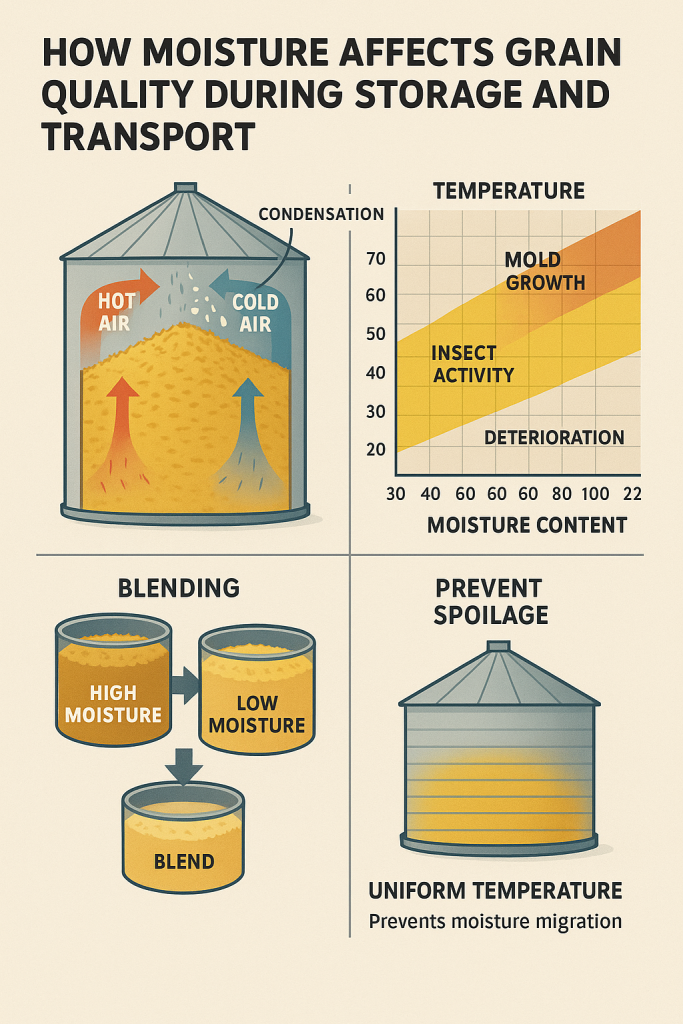
When grain is stored with a moisture content that exceeds safe thresholds (typically above 12.5% for most cereal grains), biological and chemical changes begin to take place. These include:
- Mould growth: High moisture levels create ideal conditions for fungi, particularly species like Aspergillus and Fusarium, which can produce harmful mycotoxins.
- Heat generation: Microbial activity and respiration within moist grain masses generate heat, leading to the formation of ‘hot spots’ in silos.
- Insect infestation: Warm, humid conditions provide a breeding ground for weevils and other grain-damaging pests.
Left unchecked, these factors rapidly degrade grain quality and can lead to complete spoilage.
How does moisture variability lead to grain quality loss?
Even if the overall average moisture content appears acceptable, uneven drying can cause localised issues. Grain near the silo wall or roof might absorb moisture from condensation, while other pockets remain dry. These inconsistencies increase the risk of clumping, spoilage, and damage during handling.
Moisture gradients also make it difficult to aerate grain effectively one of the primary tools for keeping stored grain cool and safe. Without uniform conditions, grain quality quickly deteriorates.
How Does Transport Affect Grain Moisture Content?
Grain is hygroscopic, meaning it absorbs and releases moisture depending on the surrounding air. During transport, especially over long distances or through changing weather conditions, grain can be exposed to:
- Condensation within trailers
- Humidity and rain infiltration
- Heat exposure that accelerates respiration
If trucks or trailers are not properly sealed or if transit times are prolonged, grain moisture can rise, reducing storability upon arrival.
What are the consequences of moisture change during haulage?
Moisture fluctuations during grain haulage can lead to a range of costly consequences. When grain absorbs excess moisture in transit, it risks quality downgrading at receival points due to spoilage, clumping, or changes in weight. Buyers may reject entire loads if there’s evidence of mould or contamination, particularly in sensitive markets or during humid seasons.
In severe cases, this can result in total write-offs or significant reductions in sale price, impacting grower profitability. McNaughts minimises these risks by providing professional bulk freight transport solutions that use sealed, weather-resistant equipment and efficient, timely routing to protect grain quality from paddock to delivery point.
Best Practices for Managing Grain Moisture
Grain storage operators use a combination of techniques to manage moisture:
- Moisture meters: Portable or fixed devices used to regularly test grain samples
- Temperature cables: Installed in silos to detect hot spots that could indicate spoilage
- Aeration systems: Move ambient air through grain to reduce moisture and cool the bulk
- Grain turning: Rotating grain within storage to even out temperature and moisture distribution
These tools help operators take timely action and maintain safe storage conditions.
How can logistics providers support moisture control?
Moisture management doesn’t end at the farm gate logistics providers play a critical role in preserving grain quality throughout the supply chain. A reliable transport partner supports moisture control by using sealed, ventilated trailers that shield grain from rain, humidity, and temperature fluctuations during haulage.
Timely coordination of pickups around harvest schedules helps prevent unnecessary on-farm delays that could expose grain to moisture risks. Additionally, maintaining short and efficient transit times limits the grain’s exposure to variable weather conditions.
At McNaughts, we work closely with growers to deliver tailored transport solutions, ensuring your grain is moved safely, swiftly, and in peak condition.
Protect Your Grain Investment
Moisture control is not just about preventing spoilage, it’s about maximising your return. By investing in monitoring tools and partnering with experienced logistics providers, you can protect your grain quality from harvest to delivery. Check your grain moisture levels before storage, ensure aeration systems are working correctly, and trust a reliable carrier who understands the nuances of grain handling.
If you’re looking for a grain logistics partner who prioritises quality, efficiency, and care. McNaughts is here to help. Get in touch with our grain logistics team today to discuss your next harvest or storage needs.
