

5 min read
Pallet transport is one of the most efficient and widely used freight solutions for moving goods across Australia. From agricultural supplies to retail stock and industrial materials, palletised freight keeps products secure, organised, and easy to handle throughout the supply chain.
At McNaughts, we provide reliable pallet transport services across regional and metro routes, ensuring goods arrive safely and on time. In this guide, we break down exactly how pallet transport works, from preparation to final delivery.
What Is Pallet Transport?
Pallet transport refers to the movement of goods that are stacked and secured onto pallets before being loaded onto a truck. A pallet acts as a stable base that allows forklifts and pallet jacks to lift, stack, and move freight efficiently.
This method reduces handling time, protects products from damage, and maximises trailer space. Pallet transport is commonly used for boxed goods, bagged fertiliser, packaged animal feed, machinery parts, and retail stock. Unlike bulk freight, palletised goods remain packaged and unitised, making them easier to track and manage.
Step 1: Preparing Goods for Palletisation
The first step in pallet transport is preparing the goods correctly. Items are stacked evenly onto a standard pallet, usually timber or plastic ensuring weight is distributed uniformly. Once stacked, the load is secured using shrink wrap, straps, or protective corner boards. This prevents movement during transit and protects the goods from dust, vibration, or shifting. Correct pallet preparation is critical. Poor stacking can lead to unstable loads, product damage, or safety hazards during lifting and transport.
Step 2: Booking and Freight Scheduling
Once goods are palletised, the next step is organising transport. Businesses provide key details such as:
- Number of pallets
- Weight per pallet
- Pickup and delivery locations
- Access requirements (e.g. forklift onsite or tail lift needed)
At McNaughts, our general freight transport service ensures flexible scheduling across regional NSW, VIC, and SA. We coordinate pickups to align with business operations and delivery timeframes.
Step 3: Collection and Loading
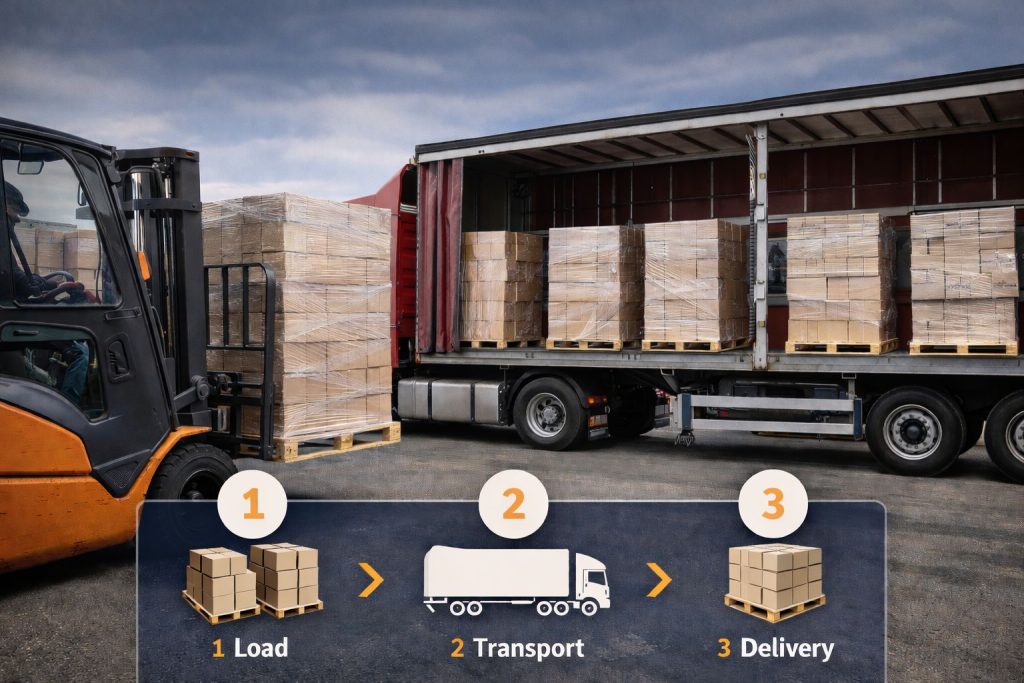
On the scheduled day, the truck arrives for collection. Pallets are loaded using forklifts or pallet jacks, depending on site facilities. Drivers conduct visual inspections to ensure loads are stable and compliant with weight and safety regulations. Inside the trailer, pallets are strategically positioned to maintain balance and prevent shifting. Load restraint systems, including straps and gates, are used to secure freight during transport. Proper loading ensures smooth transit and minimises the risk of damage.
Step 4: Transportation and Tracking
Once on the road, palletised freight is transported via the most efficient route to its destination. Route planning considers road conditions, traffic, weather, and delivery schedules. McNaughts operates with a modern fleet and GPS tracking systems, allowing real-time communication and visibility throughout the journey. Our compliance with NHVR regulations and Chain of Responsibility obligations ensures every shipment meets safety standards. For larger consignments or high-volume clients, pallet freight can also be combined with bulk freight transport solutions to streamline supply chains.
Step 5: Delivery and Unloading
Upon arrival, pallets are unloaded using forklifts, pallet jacks, or tail lifts if required. Delivery documentation is confirmed, and goods are handed over to the recipient. Because goods remain palletised throughout the journey, unloading is typically fast and efficient. This reduces labour costs and minimises handling risks. For businesses operating on tight schedules, pallet transport offers predictable delivery times and smooth handovers.
What Are the Benefits of Pallet Transport?
Pallet transport offers several advantages:
- Improved load stability and product protection
- Faster loading and unloading times
- Reduced handling and labour costs
- Better use of trailer space
- Easier inventory tracking and management
It’s a cost-effective solution for businesses that regularly ship packaged goods across regional or metro routes.
Key Takeaways
- Pallet transport involves stacking, securing, and moving goods on pallets for safe and efficient delivery.
- Proper preparation and load restraint are essential to prevent damage.
- Palletised freight reduces handling time and improves supply chain efficiency.
- McNaughts offers reliable, compliant pallet transport services across regional and metro Australia.
Why Choose McNaughts for Pallet Transport?
With decades of experience in rural and interstate freight, McNaughts provides dependable pallet transport services tailored to your needs. Our strengths include:
- Reliable general freight transport across regional and metro corridors
- Flexible scheduling and responsive customer service
- Experienced drivers familiar with rural and city delivery conditions
- Safe, compliant transport practices
- Transparent communication from pickup to delivery
Whether you’re moving a few pallets or managing recurring shipments, we ensure your freight is handled with care and efficiency. Contact us today to book your pallet transport or request a tailored freight quote.
