

6 min read
Transporting goods isn’t always as simple as loading and delivering, especially when those goods pose a risk to people, property, or the environment. These are known as dangerous goods, and they’re strictly regulated in Australia under national and international guidelines. Whether you’re a supplier, producer, or transporter, understanding what qualifies as dangerous goods and how they’re classified, is critical for safe and legal freight operations. At McNaughts, we specialise in compliant dangerous goods transport across regional Australia. Here’s what you need to know.
What Are Dangerous Goods?
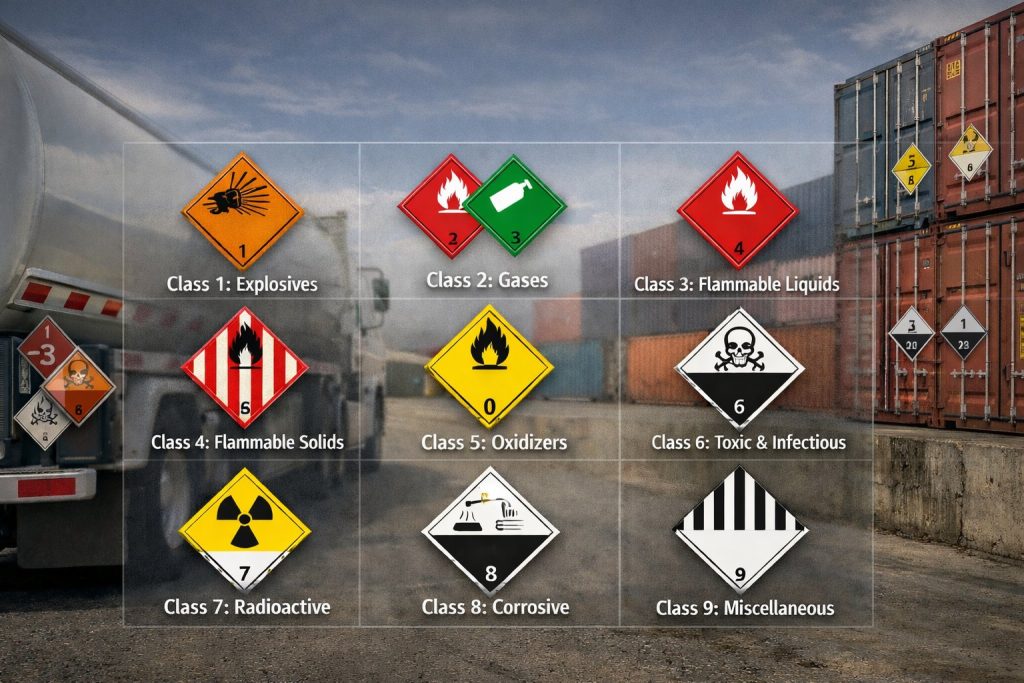
Dangerous goods are substances or items that can pose a risk to health, safety, property, or the environment during transport or storage. They include chemicals, gases, flammable materials, explosives, corrosives, and even some agricultural products like certain fertilisers. In Australia, the classification of dangerous goods is governed by the Australian Dangerous Goods (ADG) Code, which aligns with international standards. These goods are divided into nine classes based on their specific hazard.
What Are the Nine Classes of Dangerous Goods?
Each class reflects a particular risk and has its own handling, packaging, and transport requirements. Here’s a breakdown:
Class 1: Explosives
Includes fireworks, ammunition, and blasting agents. Highly regulated due to their potential for detonation.
Class 2: Gases
Divided into flammable gases (e.g. LPG), non-flammable gases (e.g. nitrogen), and toxic gases (e.g. chlorine). Transport requires pressurised cylinders and strict ventilation.
Class 3: Flammable Liquids
Includes fuels, paints, and solvents like ethanol and petrol. These must be contained in sealed, approved containers to reduce fire risk.
Class 4: Flammable Solids
Includes substances like sulphur or magnesium that can ignite through friction or spontaneous reaction.
Class 5: Oxidising Substances and Organic Peroxides
Often found in fertilisers and industrial chemicals. These can accelerate combustion and require careful separation from other classes.
Class 6: Toxic and Infectious Substances
Includes pesticides, some pharmaceutical products, and biological hazards. These materials pose direct risks to human health.
Class 7: Radioactive Materials
Found in medical, scientific, and mining applications. Requires highly specialised transport licensing.
Class 8: Corrosive Substances
Acids, alkalis, and industrial cleaners that can corrode metal or damage skin upon contact.
Class 9: Miscellaneous Dangerous Goods
Materials that pose hazards not covered by other classes, such as environmentally hazardous substances or lithium batteries.
Are Agricultural Products Classified as Dangerous Goods?
Yes, many common agricultural inputs fall under dangerous goods regulations. These include:
- Certain liquid fertilisers and oxidisers (Class 5)
- Fuel and diesel for machinery (Class 3)
- Agricultural sprays and pesticides (Class 6)
- Gas cylinders used in crop production (Class 2)
If you’re unsure whether a product qualifies, check its Safety Data Sheet (SDS). The SDS will clearly indicate the product’s classification, required placarding, and handling instructions.
Why Is Dangerous Goods Classification Important?
Proper classification ensures:
- Safe handling and packaging
- Correct vehicle and driver licensing
- Legal compliance during transport
- Emergency response readiness
- Reduced risk of environmental or human harm
Failing to classify and declare dangerous goods can lead to severe penalties, transport delays, or even serious accidents.
How Does McNaughts Manage Dangerous Goods Transport?
McNaughts provides safe and reliable dangerous goods transport across Victoria, New South Wales, and South Australia. Our services include:
- Licensed and trained drivers familiar with ADG regulations
- Correctly equipped vehicles, including placards and containment systems
- Route planning to avoid restricted zones or risk-prone areas
- Compliance with NHVR Chain of Responsibility requirements
- Real-time tracking and communication for full visibility
We understand the complexities of rural freight and work closely with clients to ensure dangerous goods are moved safely and legally.
Key Takeaways
- Dangerous goods are classified into nine classes based on their hazards under the ADG Code.
- Many agricultural products, including fuel, sprays, and certain fertilisers, qualify as dangerous goods.
- McNaughts offers licensed, compliant transport services for DGs across regional Australia.
- Proper classification and handling prevent risks, protect your business, and keep your freight moving safely.
How Can You Stay Compliant with Dangerous Goods Regulations?
If your business handles or ships dangerous goods, here are key steps to stay compliant:
- Know your products – Refer to the SDS for every substance you use or transport.
- Train your staff – Everyone involved in packing, loading, and dispatching must understand basic DG procedures.
- Label and placard correctly – Use correct signage and documentation to identify risks.
- Use approved carriers – Work with logistics providers like McNaughts who are experienced and licensed to handle DGs.
- Review regularly – Regulations evolve, so keep updated with the latest ADG Code changes.
Contact us to discuss your dangerous goods freight needs or to check if your products require special handling.
