

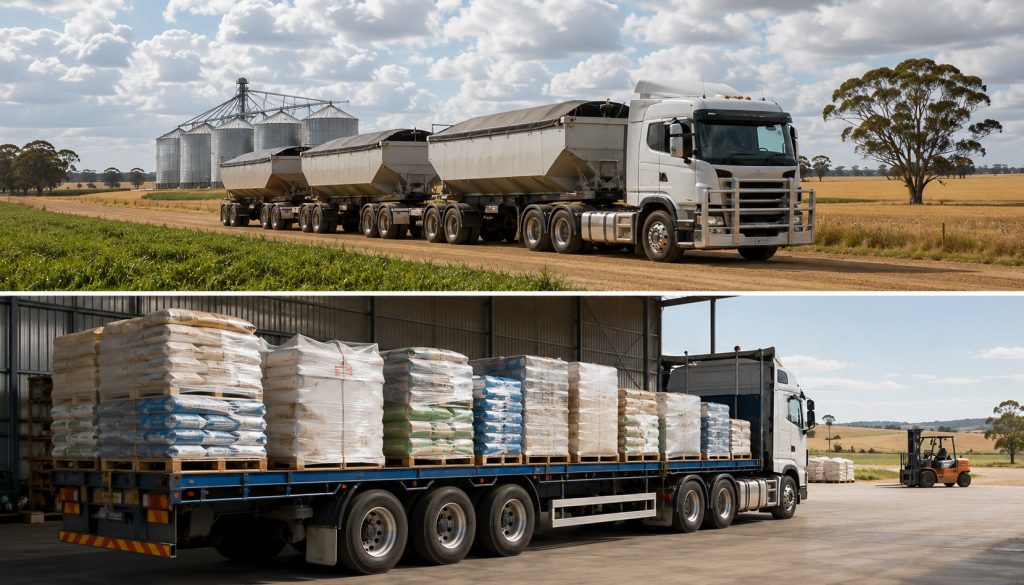
Moisture control during fertiliser transport is essential for maintaining product quality, preventing caking, reducing waste, and ensuring fertiliser arrives ready for application. From loading through to delivery, proper handling, suitable transport equipment, and experienced freight operators all help minimise moisture exposure and protect valuable agricultural products.
Key Takeaways
- Moisture can cause fertiliser to cake, harden, degrade, or lose spreading performance.
- Choosing the right transport method helps reduce exposure to rain, humidity, and condensation.
- Clean, dry equipment is critical before every fertiliser load.
- Different fertiliser types require different moisture management strategies.
- Reliable freight providers help preserve product quality from collection to delivery.
- Proper storage after delivery is just as important as transport.
Why Is Moisture Control Important During Fertiliser Transport?
Fertiliser is designed to improve soil health and maximise crop performance, but excessive moisture can reduce its effectiveness long before it reaches the paddock. Whether transporting granular products, blended fertilisers, or organic materials, keeping moisture out protects both product quality and customer investment.
At McNaughts, efficient bulk freight transport plays an important role in helping agricultural products reach growers in the condition they were intended. Moisture management begins before loading and continues throughout every stage of the journey.
Even relatively small amounts of moisture can trigger changes that affect handling, storage, and application.
What Problems Can Moisture Cause During Fertiliser Transport?
Water exposure affects different fertilisers in different ways, but several common issues occur across most products.
Caking and Hardening
Granular fertiliser readily absorbs moisture from humid air or direct water exposure. As moisture enters the product, granules begin sticking together, creating hard lumps that are difficult to break apart.
Caked fertiliser often causes problems for fertiliser spreaders because the material no longer flows evenly through application equipment. Uneven spreading can lead to inconsistent nutrient distribution across paddocks.
Reduced Product Quality
Many fertilisers rely on precise nutrient blends. Excess moisture may alter physical properties, making products harder to handle while reducing consistency during application.
Although nutrients themselves may remain present, compromised granule quality can affect spreading accuracy and overall efficiency.
Increased Handling Costs
Moisture-damaged fertiliser often requires additional handling before use. Operators may need to break apart compacted material or remove damaged product entirely.
This creates unnecessary labour, delays field operations, and increases costs across the supply chain.
Product Contamination
Moist environments may also increase the likelihood of contamination from dirt, debris, or organic matter if loads are not properly protected.
Maintaining clean transport equipment helps reduce this risk significantly.
What Causes Moisture Exposure During Fertiliser Transport?
Moisture can enter fertiliser loads through several different sources, many of which are preventable with proper planning.
The most common causes include:
- Rain during loading or unloading
- High humidity during transport
- Condensation forming inside trailers
- Damp or contaminated transport equipment
- Poorly sealed covers or tarps
- Delays that leave loads exposed to changing weather conditions
Understanding these risks allows transport providers to implement practical measures that keep products dry throughout the journey.
Which Transport Equipment Helps Protect Fertiliser?
Different freight methods suit different agricultural products. Selecting the correct equipment is one of the most effective ways to reduce moisture exposure.
For large-volume agricultural products, specialised walking floor transport offers efficient unloading while helping minimise unnecessary product handling. Reduced handling means fewer opportunities for contamination or exposure during delivery.
Bulk trailers should always be thoroughly cleaned and dried before loading new consignments.
Where bagged products are involved, suitable pallet transport solutions also help reduce the risk of moisture damage during handling and storage.
How Should Fertiliser Be Prepared Before Transport?
Moisture control starts well before a truck leaves the loading site.
Preparation includes inspecting both the product and transport equipment to ensure conditions are suitable for safe transport.
Important preparation steps include:
- Checking trailers are completely dry before loading.
- Inspecting covers, seals, and tarpaulins for damage.
- Avoiding loading during heavy rainfall where possible.
- Ensuring previous loads have been fully removed.
- Confirming fertiliser is stored correctly before collection.
- Scheduling transport to minimise unnecessary delays.
Small preventative measures often prevent much larger problems further along the supply chain.
Does Moisture Affect Different Fertiliser Types Differently?
Yes. Different fertilisers respond differently to moisture depending on their composition.
Granular fertilisers are especially vulnerable because their free-flowing structure depends on dry, separate granules. Once moisture enters the product, caking becomes much more likely.
Products such as granular fertiliser benefit significantly from careful handling throughout transport, particularly during periods of high humidity.
Organic fertilisers, including chicken manure fertiliser, may present different moisture considerations. While these products naturally contain varying moisture levels, excessive water exposure can still affect handling characteristics and storage stability.
Similarly, biofertilisers, gypsum products, and agricultural lime each have their own transport requirements depending on packaging, storage conditions, and intended application.
Why Does Freight Experience Matter?
Agricultural freight is very different from standard freight operations.
Experienced operators understand seasonal conditions, product sensitivities, loading procedures, and delivery requirements that help preserve product quality throughout transport.
Professional fertiliser transport providers consider:
- Weather forecasts before dispatch
- Suitable equipment selection
- Correct load covering procedures
- Safe loading practices
- Efficient delivery scheduling
- Clean equipment between loads
These practices reduce avoidable risks while helping customers receive fertiliser in excellent condition.
Many agricultural operators also require broader logistics support beyond fertiliser, including general freight transport for equipment, packaged products, and farm supplies throughout the year.
How Does Moisture Control Support Farm Productivity?
Every stage of the agricultural supply chain contributes to successful crop production.
When fertiliser arrives dry and free flowing, growers can begin spreading immediately without spending valuable time breaking apart compacted material or dealing with blocked equipment.
Reliable moisture management supports:
- More consistent spreading performance
- Reduced product waste
- Faster field operations
- Better nutrient distribution
- Improved storage after delivery
- Lower overall operating costs
These advantages become especially valuable during busy planting windows when every day counts.
How Does Moisture Control Fit Into the Wider Agricultural Supply Chain?
Fertiliser transport is closely connected with many other agricultural freight services.
The same attention to product protection also applies to grain transport, grain storage products, hay, silage, livestock feed, and other bulk commodities. Every product has different handling requirements, but preventing unnecessary moisture exposure remains a common priority.
Many transport businesses also coordinate dangerous goods transport where required, alongside bulk agricultural freight, ensuring products move safely while meeting relevant industry standards.
Experienced logistics providers understand how seasonal weather, regional conditions, and delivery schedules influence transport decisions across Australia’s farming regions.
Best Practices for Protecting Fertiliser During Transport
Effective moisture management relies on consistent procedures rather than a single solution.
Successful transport operations typically include:
- Inspecting equipment before every load
- Keeping trailers clean and dry
- Using appropriate load covers
- Monitoring weather conditions
- Reducing loading and unloading delays
- Delivering promptly to minimise exposure
- Following product-specific handling requirements
When these practices are followed consistently, fertiliser reaches customers in a condition that supports efficient spreading and strong crop performance.
Conclusion
Moisture control during fertiliser transport protects product quality from the moment a load leaves the supplier until it reaches the farm. Preventing caking, contamination, and unnecessary product degradation helps growers maximise the value of every tonne delivered while reducing delays during busy farming seasons.
Choosing experienced agricultural freight specialists, using appropriate transport equipment, and following proven handling practices all contribute to maintaining fertiliser quality throughout the supply chain.
Contact McNaughts for Reliable Fertiliser Transport
Whether you require bulk agricultural logistics, specialised fertiliser transport, or dependable freight solutions across Australia, experienced handling makes all the difference. Learn more about McNaughts and the company’s commitment to agricultural transport, or contact the team to discuss your freight requirements.
