

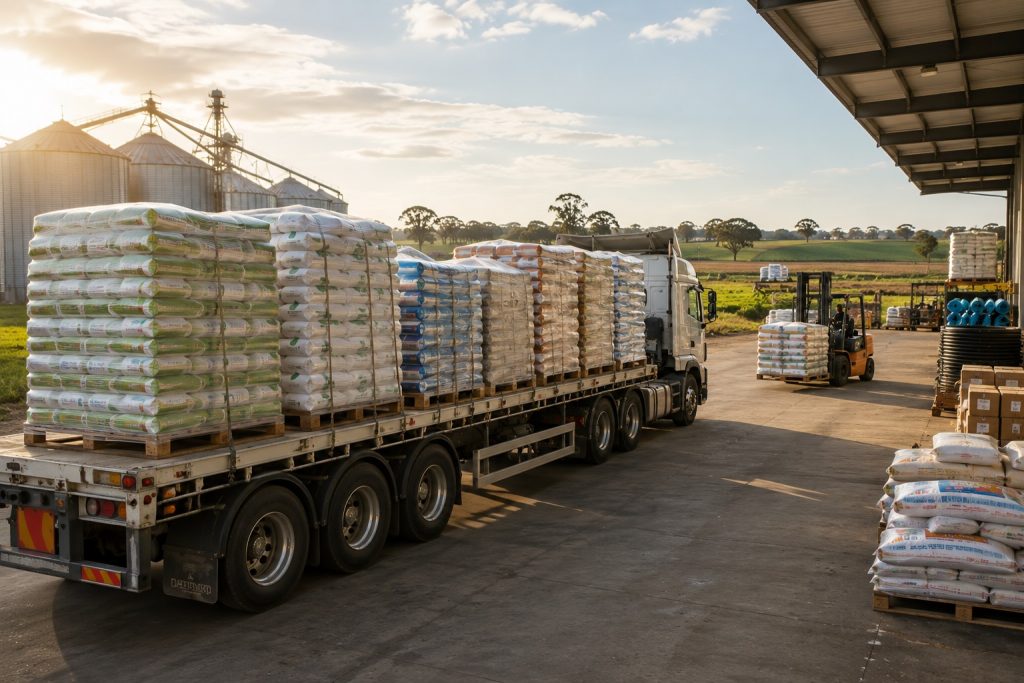
Pallet transport plays a vital role in the agricultural supply chain by providing a safe, efficient, and reliable way to move packaged farm products, agricultural supplies, and equipment. It helps reduce product damage, streamlines loading and unloading, and ensures goods reach farms, distributors, and retailers on time.
Key Takeaways
- Pallet transport improves efficiency across agricultural logistics.
- Standardised pallets reduce handling time and minimise product damage.
- Many agricultural products rely on pallet transport before reaching farms.
- Reliable freight providers help maintain supply chain continuity.
- Pallet transport works alongside bulk freight services to support Australian agriculture.
- Choosing experienced transport operators helps improve delivery reliability.
Why Is Pallet Transport Important in Agriculture?
Agriculture depends on efficient logistics. While bulk commodities such as grain and fertiliser often move in specialised trailers, many essential agricultural products are transported on pallets to improve handling, safety, and efficiency.
Professional general freight transport services help move palletised goods between manufacturers, suppliers, distribution centres, and farms every day. Whether transporting fertiliser, animal feed, packaged seed, irrigation components, or machinery parts, pallet transport helps products arrive in good condition and ready for use.
Without reliable freight networks, even short delays can disrupt planting, harvesting, livestock management, and seasonal farm operations.
What Products Are Commonly Moved Using Pallet Transport?
A wide range of agricultural products travel on pallets because they require secure handling and efficient loading.
Common palletised freight includes:
- Packaged fertilisers
- Seed bags
- Agricultural chemicals
- Irrigation equipment
- Machinery parts
- Livestock supplements
- Farm fencing supplies
- Packaged animal feed
Many organic products, including chicken manure fertiliser, are also supplied in bagged or packaged formats suitable for pallet transport. Secure palletisation protects these products during loading, transit, and unloading while making warehouse storage more efficient.
How Does Pallet Transport Improve Supply Chain Efficiency?
Standardised pallet systems allow forklifts and loading equipment to move products quickly and safely.
Rather than manually loading hundreds of individual items, entire pallet loads can be transferred in minutes. This reduces labour requirements while helping freight operators maintain reliable delivery schedules.
Across Australia’s agricultural regions, pallet transport supports smoother movement between suppliers, warehouses, distribution centres, and farms.
The benefits extend throughout the supply chain, reducing delays and improving inventory management for businesses of every size.
How Does Pallet Transport Protect Agricultural Products?
Agricultural products often travel long distances before reaching their final destination. During transport, they may encounter varying road conditions, changing weather, and multiple loading points.
Correct palletisation helps protect freight by:
- Keeping products securely stacked
- Reducing movement during transport
- Minimising crushing and impact damage
- Improving load stability
- Simplifying warehouse handling
- Supporting safer unloading procedures
Combined with quality packaging, pallets provide an additional layer of protection that helps maintain product quality throughout the journey.
How Does Pallet Transport Work Alongside Bulk Freight?
Agricultural logistics rarely rely on one transport method alone.
Large-volume commodities often move through bulk freight transport, while packaged products travel on pallets using dedicated freight services. Together, these transport solutions support farms throughout the production cycle.
For example, grain transport may move harvested crops from farms to storage facilities, while pallet deliveries supply replacement machinery parts, crop protection products, or packaged fertiliser needed for future planting.
Likewise, products associated with grain storage operations often arrive on pallets before being installed or distributed.
Using the right transport solution for each product improves efficiency while helping reduce unnecessary handling.
Which Agricultural Industries Benefit Most from Pallet Transport?
Almost every agricultural sector relies on pallet transport in some capacity.
Broadacre cropping operations regularly receive palletised seed, fertiliser, spare parts, and maintenance supplies.
Livestock producers depend on pallet deliveries for animal health products, nutritional supplements, fencing materials, and equipment.
Horticultural businesses receive irrigation components, growing media, packaging supplies, and harvest equipment through pallet freight networks.
Agricultural suppliers also use pallet transport to distribute products efficiently across regional Australia.
How Does Reliable Transport Reduce Downtime?
Timing is critical in agriculture.
Seasonal activities such as planting, harvesting, fertiliser application, and livestock management often operate within narrow timeframes. Delayed deliveries can quickly affect productivity.
Reliable pallet transport helps reduce downtime by supporting:
- Predictable delivery schedules
- Faster loading and unloading
- Reduced product damage
- Better inventory planning
- Improved access to farm supplies
- More efficient regional distribution
When businesses receive essential products on time, farm operations can continue without unnecessary interruptions.
Why Does Experience Matter in Agricultural Freight?
Agricultural freight presents unique challenges that differ from standard commercial logistics.
Freight operators must understand seasonal demand, regional road networks, weather conditions, and the handling requirements of different agricultural products.
For businesses transporting regulated materials, experienced providers may also coordinate dangerous goods transport where appropriate, ensuring freight complies with relevant safety requirements while moving efficiently through the supply chain.
Working with experienced agricultural logistics providers helps businesses reduce risks while maintaining reliable deliveries throughout the year.
How Does Pallet Transport Support Other Agricultural Freight Services?
Pallet transport forms one part of a much larger agricultural logistics network.
It complements specialised freight services including fertiliser transport, grain transport, livestock feed distribution, hay deliveries, and bulk commodity movements.
For example, while specialised walking floor transport efficiently unloads bulk agricultural products, pallet freight supports the movement of packaged products that require different handling methods.
Many farms receive both bulk and palletised deliveries throughout the year depending on operational needs.
This integrated approach gives growers greater flexibility while ensuring products arrive in the most suitable transport format.
What Should Businesses Look for in a Pallet Transport Provider?
Selecting the right freight partner can make a significant difference to delivery performance and product protection.
When comparing providers, consider factors such as:
- Agricultural industry experience
- Modern, well-maintained equipment
- Reliable delivery scheduling
- Strong regional transport networks
- Safe freight handling procedures
- Clear communication throughout delivery
Choosing a transport provider with experience across multiple agricultural sectors helps ensure freight moves efficiently regardless of seasonal demand or changing operating conditions.
Conclusion
Pallet transport is an essential part of Australia’s agricultural supply chain. From packaged fertilisers and seed through to machinery parts and livestock supplies, palletised freight helps products move safely, efficiently, and reliably between suppliers and farms.
When combined with specialised freight services such as bulk freight, grain transport, and fertiliser transport, pallet logistics support every stage of agricultural production. Reliable transport providers help minimise delays, reduce product damage, and keep farming operations running smoothly throughout the year.
Contact McNaughts for Agricultural Freight Solutions
Whether you require pallet transport, bulk agricultural logistics, or specialised freight services, McNaughts has the experience and capability to support your supply chain. Learn more about McNaughts or contact the team to discuss your agricultural freight requirements.
